The Story of Rincón Water Safety
February 12, 2019 — A Turning Point
On February 12, 2019, the surf community of Rincón, Puerto Rico faced a painful reality.
A local surfer named Francisco "Pancho" Purcel passed away while surfing at María’s Beach. When he was pulled from the water, there was confusion. No clear leadership. No AED within reach. No shared understanding of what to do in those critical first moments before emergency services arrived.
The loss deeply affected the community and forced difficult questions:
-
What should we have done?
-
What happens when someone is pulled from the water?
-
How do you act effectively before help arrives?
The community didn’t want blame.
They wanted preparedness.
One Week Later — From Grief to Action
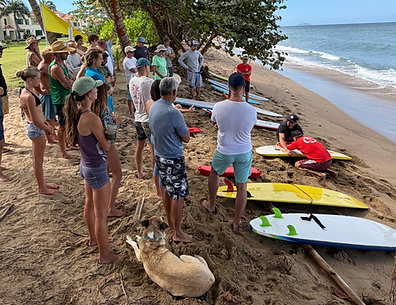
One week after Pancho’s passing, more than 60 community members gathered at a covered patio generously offered by the Engstrom family.
That day, something shifted.
CPR was demonstrated.
AED use was practiced.
Basic life-saving skills were taught.
Ocean rescue techniques using a surfboard were shared.
A mannequin, an AED, and a surfboard became the foundation of a movement.
Through donations and local support, six AEDs were installed on strategic beaches throughout Rincón. Conversations began about something larger — building a structured lifeguarding model for the town. Meetings were held with the Surfing Federation and experienced lifeguard leaders.
Momentum was building.
Then COVID paused everything.
But the mission remained.
March 2, 2023 — The Call to Formalize
On March 2, 2023, the surf community was shaken again with the passing of Toni Lopez while surfing.
It was another reminder that ocean risk is not theoretical. It is immediate. And preparation cannot wait.
That same month, Rincón Water Safety was formally reorganized as a registered 501(c)(3) nonprofit, supported by a committed group of community leaders and volunteers.
The initiative moved from grassroots reaction to structured organization.
Building Infrastructure That Saves Lives
Today, Rincón Water Safety has:
-
Installed 17 AEDs across the beaches of Rincón
-
Established 14 rescue stations equipped with flotation devices and whistles in high-risk areas
-
Conducted approximately 30 Beach Guardian seminars
-
Over 900+ community members trained
These seminars train community members to act as first responders by teaching:
-
CPR
-
AED use
-
Basic life-saving techniques
-
Ocean rescue skills
-
Proper use of the safety equipment installed on local beaches
This is not symbolic safety.
It is practical survivability.
Before RWS, Rincón faced recurring drownings.
Today, incidents have been drastically reduced, and community-led rescues by residents and visitors are now common.
Preparation works.

Francisco "Pancho" Purcel


Toni Lopez

Every AED installed, every trained responder, every rescue station increases the odds of survival before emergency services arrive.
The First 6 Minutes Matter
In open water emergencies, survival is often determined within the first four to six minutes.
Brain injury can begin within minutes.
Emergency services take time to arrive.
Ocean conditions change instantly.
Those first minutes belong to whoever is there.
Rincón Water Safety exists to ensure that when something happens, someone nearby knows what to do — and has the tools to do it.
Not someday.
Not after policy changes.
Now.
Looking Forward
Our mission is clear:
To empower community members to become capable first responders and to launch a Rincón lifeguarding program that can serve as a pilot model for safer beaches across Puerto Rico.
We believe world-class ocean destinations deserve world-class safety culture.
This work is scalable.
It is measurable.
And it saves lives.
That is why Rincón Water Safety exists.